In 1993 Alan Milward posited the controversial thesis that the EU had rescued the nation state. To survive, he argued, Europe would need to integrate more. With Greece on the “brink of the abyss”, reviewing the integrationist assumptions is now an urgent necessity. Since the completion of the single market (early 1990s), the construction of the European social and economic model or “way” has been pursued by politicians and ideologues without regards to the cost. Sovereign debt now threatens the Union in an unprecedented way. Yet whether the unfolding crisis will act as a catalyst for change is the million-Euro question.
.
Deriding the Anglo-Saxon model (limited government and free market economy) has been the favourite pastime of our élite on all sides. Nowadays, no-one is gloating. Bill Emmott (Times, April 30, 2010) puts it like it is: “Europe’s economy is the sick man of the world”. This year, “Schuman Day” was a more sombre occasion. Still, reflecting on the past is crucial to understand what went wrong. Indeed, Post-WWII integration into a single market was undeniably a success story. The basic economic assumption of the European model of regional economic integration was liberal (free trade, deregulation and small government), and it delivered what the peoples of the founding nations had expected of it; prosperity and peace.
.
In 2010 alarm bells are ringing across Europe with sovereign debt threatening to unravel the success of the early decades. How did we get here? To cut a long story short, from the Maastricht Treaty (1992) onwards, the European political class could not resist the sirens of “social” Europe or to be more precise “socialist” Europe (growth of big government, the welfare state and statism). In the noughties, the establishment of the single currency with the ECB policy of “strong Euro” led politicians to succumb to the folly of growth and development through borrowing. Preaching the saviour, more protectionist welfare state has become the electoral mantra resulting in Europe being run à la socialiste, and on credit (future generations would pay the bill!).
.
Since the first signs of scepticism appeared in the publics (late 1990s) culminating in the rejection of the Constitution in 2005, the EU leadership’s response has invariably been the same; more integration. This process has now fossilized into a dogma. Pushing for more centralised decision-making powers, a more social and overtly less liberal Europe has become the prevailing political discourse. The rise of the unsustainable welfare (member) state has been unstoppable. The Greek disaster should be seen in this context. While irresponsible and corrupt politicians should be held to account, it is evident that the mess has been enabled by the Post-Maastricht “European way” as framed by socialist-minded “éminence grises” (Jacques Delors, Tony Blair or philosophers like Juergen Habermas, to name but a few). Paradoxically, the idea of big-government has been embraced by right-wing politicians too.
.
The EU “way” (which incidentally includes turning a blind eye on Greek deceptions and probably many others) has created havoc. Europe’s economy has lost its competitive edge and now faces tough competition from emerging countries. Growth is near-zero, unemployment is high and citizens disillusioned. Predictably, the European Commission’s plan for the future (2020 Strategy for smart, sustainable and inclusive growth) calls for the creation of a more “social market”. Like the previous one, it is destined to fail. The Lisbon Treaty is likely to act as a roadmap for this utopia as well as a straight-jacket preventing any flexibility. Gone is the pragmatism of the early years.
.
French economist Guy Sorman warns that dealing with the Greek debt without addressing its fundamental cause will miss the mark. The author of “Economics Does Not Lie” opines that the rescue package can only be a palliative. In his opinion, the most pressing issue for politicians is to confront and end the current “strategy of decline”. More dogmatic integration (economic governance, regulation) would be counterproductive. However breaking out of the dominant socialist (statist) ideological mind-set which guides the élite to resort to more of the same policies, will require courage and leadership. In this regard, one can only welcome the resurgence of the British Conservative Party. At least, a healthy doze of scepticism will act like medicine for the "sick EU patient".
.
If one needed a reminder of how completely alienated from society and its realities the Euro-political class is, the recent drama of the volcanic ash-cloud provides a perfect illustration. The rigid bureaucratic and chaotic political response which led to huge economic loss, was a striking example of poor leadership compounded by a paralyzing culture of risk-aversion. As journalist Yulia Latynina aptly observed, bureaucrats had proved "more harmful than volcanoes” (Moscow Times, April 20, 2010). While the EU political élite huffed and puffed, the Russian Presidential plane bringing Dmitri Medvedev for the funerals of the Polish President landed in Krakow without a glitch . The leadership of the Union was conspicuous by its absence.
.
Right now, politicians could prove more dangerous than Greek economic woes. The painful truth for our élite is that their decisions have led Europe on a path to economic decline. It is high time to bite the bullet and change course. To start with, citizens must be engaged with more than personality cult of the founding father and “what-Europe-has-done-for-us” brochures and rhetoric. The pretence that the EU can afford the social(ist) model it is purporting to download across the continent must be dropped, or more disillusionment (and anger spilling on the streets) will be fostered.
.
Verbose sermons of solidarity and unity professed in official receptions and academic circles are aloof words spoken on the deck of the ship battered by howling winds. The markets and the increasingly Euro-sceptic electorates are no longer listening. The EU needs to go back to its wealth-creation way, and it needs it fast.
Wednesday, May 5, 2010

Monday, April 5, 2010
The EU Easter egg....
 The chicks are: the new President of the European Council and High Representative for foreign affairs...
 Friday, April 2, 2010
Eco-cultishness and the petition threatening la liberté!
In France, the "debate" on climate change has taken a turn for the worse. A petition signed by 410 scientists (mostly involved in climate research) was presented to the Minister of Education and Research, Madame Pécresse, asking for more political support for the global warming thesis as postulated by the IPCC. And even more astonishingly, requesting the government to "take action" against two climate sceptic scientists; former minister Dr. Claude Allègre and Professeur Vincent Courtillot whose views were expressed in recently published books (see below).
.
The signatories feel that these dissenting scientific opinions are discrediting the supreme seriousness of their own work. The mind boggles.
.
.
What kind of "action" is not clear. Science by decree? Criminalization of the denial-dissent of IPCC climate truth ? Internment in psychiatric hospitals for those "deranged" scientists? Et pourquoi pas un goulag climatique? The methods used by Trofim Lyssenko to impose his scientific truth under Stalin spring to mind.... But je m'égare - I digress. La France is not ze Soviet Union.
.
Of course not. But eco-intolerence amongst environment activists, scientists and greened politicians is becoming a real threat to freedom of speech and scholarship. After the former socialist minister Michel Rocard's comment, namely that the decision to scrap the carbon tax was a "crime against humanity" - oui, je répète un "crime contre l'humanité"! - we have now scientists requesting government's intervention against climate-sceptic thinking and research.
.
What this is about is an attempt by a group of interested climatologists defending the thesis of man-made global warming, to discredit the work of scientists who dissent. The "niet" of the latter to climate alarmism hype does not go down well with the former, namely the self-appointed priesthood of Gaia .... Behind the carefully crafted text (accessible in article in Libération ), it appears that the objective of "alarmist scientists" (two are members of the IPCC-GIEC) is to see the UN "absolute climate truth" protected by the State, and the publication of dissenting research/opinions vetted.
.
.
Why? Because these climatologists live from climate alarmism - massive public funds allocated to it - and in the wake of the various climate-gates, scepticism among the publics has risen hence potentially threatening their jobs and could undermine the "climate business" (See post on ze blog Objectif Liberté). Fearing that research budgets might melt away faster than polar ice-caps, our "endangered" climatologists strike back!
.
For more on this latest twist français in the culte de Gaïa, climate alarmism et autres réchauffismes liberticides, read this excellent post by Jean-Michel Bélouve author of "La Servitude Climatique" (see below) in the Cri du Contribuable.: Petition against Allègre and Courtillot: French climatologists are losing it" (Les climatologues français perdent tout sens de la mesure). The author points notably to the fact that the two French "other thinker"-scientists are not alone. Many more have not endorsed the so-called IPCC "scientific consensus"! He notably recalls the 1992 Heidelberg Appeal signed by 4,000 scientists (including 70 nobel prize winners) who inter alia voiced concern about the intrusion of ideology in science (Earth Summit in Rio).
.
.
For more on this latest twist français in the culte de Gaïa, climate alarmism et autres réchauffismes liberticides, read this excellent post by Jean-Michel Bélouve author of "La Servitude Climatique" (see below) in the Cri du Contribuable.: Petition against Allègre and Courtillot: French climatologists are losing it" (Les climatologues français perdent tout sens de la mesure). The author points notably to the fact that the two French "other thinker"-scientists are not alone. Many more have not endorsed the so-called IPCC "scientific consensus"! He notably recalls the 1992 Heidelberg Appeal signed by 4,000 scientists (including 70 nobel prize winners) who inter alia voiced concern about the intrusion of ideology in science (Earth Summit in Rio).
.
Answering the accusations that his work is not peer-reviewed, Prof. Courtillot puts his record straight in Le Monde. and Le Figaro. He notes inter alia: "It is the mechanism of the IPCC I am criticical of. I maintain that even with many more scientists, such a system cannot possibly garantee to tell the 'scientific truth'.
.
Also see the "lettre ouverte" by the mathematician Benoît Rittaud ("Le mythe climatique", see below). His critique hits the nail. The implications of this démarche for state intervention - if acted upon by public authorities - against two scientists are serious; introduction of political censorship of scientific work, infringement of freedom of speech and thought.
.
Douce France, cher pays de mon enfance et des droits de l'Homme... Quid la liberté d'expression et de penser? Pauvre science! With Liberté pour l'Histoire historians have been fighting against state edicted historical truths (lois mémorielles). It now looks like minority view scientists might be forced to do the same "pour la Science".... Aux armes citoyens!
.
.
That climatologists would resort to this kind of "trick" is deeply troubling. Frankly, this latest épisode climatique begs the question of whether the French "rechauffiste" brigade is not actually prepared to go down the road of green authoritarianism. It is a sad day for our democracy....
.
"Pour rire it's tax free", enjoy the caricature très drôle of a French climate lesson created by Yann Goap for the blog "Pensée-unique" . In the front row, two GIEC-IPCC children-scientists (a Dr. Pachauri or le breton Hervé le Treut?) snitching on their dissenting classmate-scientists (Courtillot and Allègre). The teacher is Madame la Ministre and the leçon is - in franglais - "In réchauffisme we trust" (In warmism we trust). The language used in French is childish and would translate in something like "Mistress, they are pestering us...."
.
"Pour rire it's tax free", enjoy the caricature très drôle of a French climate lesson created by Yann Goap for the blog "Pensée-unique" . In the front row, two GIEC-IPCC children-scientists (a Dr. Pachauri or le breton Hervé le Treut?) snitching on their dissenting classmate-scientists (Courtillot and Allègre). The teacher is Madame la Ministre and the leçon is - in franglais - "In réchauffisme we trust" (In warmism we trust). The language used in French is childish and would translate in something like "Mistress, they are pestering us...."
.
 Ce à quoi on pourrait répondre (answer) en français de cour de maternelle: Maîkresse, yaka lire queske les bonomes verts veules pas qu'on sêt!
 Loosely translated in good franglais this means: read what les druides verts do not want you to know en français.
Dr. Claude Allègre: L'imposture climatique où la fausse écologie.
Benoît Rittaud : Le mythe climatique.
Professeur Vincent Courtillot: Notre voyage au centre de la Terre.
Jean-Michel Bélouve: La servitude climatique: changement climatique business et politique.
Dr. Emmanuel Martin: Un Monde Libre
Le blog de Vincent Bénard: Objectif Liberté, dossiers et gazette du "réchauffement" climatique.
Nananèèèère (so haha see)..
Monday, March 29, 2010
Earth Hour: the tyranny of Gaïa?

Version longue:
Before 1972 (first European environmental action plan), there was darkness in Europe. The nation-state, its citizenry and industries were blighted, selfish polluters not paying due care to “Mother Earth” (Gaïa) and its creatures. And then there was light, green light that is, switched on permanently by a common environmental policy (Single European Act, 1987). Or so goes the official tale. Curiously with the Earth Hour, the friends of Gaïa were asking us to celebrate darkness again, quite literally by switching off our lights for an hour in an absurd ritualistic global communion against progress.
.
The organiser of this initiative, the World Wildlife Fund trumpeted success. In France the national electricity company EDF observed a mere 1% decrease in electricity consumption, a situation that can surely best be explained by the fact that only the modern day followers of the cult of Gaïa - the “greens” - and, their new priesthood - NGOs, experts, politicians - heeded the call. Environmentalists have been influenced by James Lovelock’s “theory of Gaïa” which claims that the earth is a single living organism. Unperturbed by the fact that many scientists view it as little more than a neo-pagan new age religion, environmentalism regards Man and modernity (notably energy production and consumption) as a “disease killing the planet”.
.
The controversial hypothesis has influenced the “deep ecology” movement and is a foundation stone of political ecology in the Western world. It has had a profound impact on governance and policy-making in Europe. As academics like to point out, the environmental policy is the perfect example of Jean Monnet’s neo-functionalist method of integration through “spill-over” in other sectors. Hence the green policy has “stealthily” grown in size and is now on its 6th Environmental Action Programme (2002-2012). Addressing climate change, nature and biodiversity, environment and health, natural resources and waste, it basically permeates all aspects of policy-making, and by implication, of our lives.
.
Apparently we should only be grateful. Questioning the scientific or moral foundation of green economic integration and cultishness is considered politically incorrect. If you do, you are treated as barking mad or ignorant. When your “scepticism” comes out of the closet, you fall into the category of the “bag guys” or deniers. The “good guys”, namely the green experts are a bit like the Navi people in Avatar. They “commune” with Mother Nature and know best. Armed with the absolute Truth, they preach the cult of Gaïa in its less extreme form through policies, laws, campaigns and by resorting to climate alarmism to impose their “noble” cause on the masses.
.
Of course, the European Union is not the utopian planet of Pandora. Behind the official discourse of “legacy to future generations”, (green) greed, power and interests play an important part. Organisations like the WWF are friends with big corporations. Greening one's conscience has a price: donations. The friends of Gaïa also have many friends in Brussels and receive public funds (EU budget) whether taxpayers approve or not. As the recent International Policy Network study “the Friends of the EU" revealed, green advocacy groups like Friends of the Earth, Birdlife or WWF (the so-called big 8 or 10) receive plenty of funds to lobby for more funds and provide environmental expertise to the Commission. The researchers concluded that “sponsoring the narrow interests of such NGOs undermined the democratic process”.
.
Politicians have embraced the green dogma with gusto. When the French government recently scrapped its carbon tax plan, the socialist politician Michel Rocard crossed a verbal Rubicon by calling this decision a “crime against humanity”. The proposed tax promoted by environmentalist leaders with no democratic mandate is in fact opposed by a majority of people (59%). The Secretary of State for ecology declared herself “distraught” by the setback, prompting some bloggers to comment that too much ecology on one’s mind could be a mental health hazard... Rest assured that the proposal will be pursued with a vengeance at supranational level in one form or another. The proverbial democratic deficit of the EU has served Gaïa well.
.
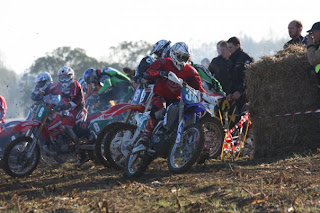 Eco-cultishness is relentless. A friend of mine (No. 34 left) is passionate about off-road motor biking and takes part in amateur races in rural Brittany. His idea of a fun time keeps the local bike shop in business. On racing weekends, the villages burst into life with competitors and support team-families. It is festive, noisy and definitely not carbon-emission free. These armour-clad, mostly middle-aged male weekend-bikers stand accused by the local “écolos” of riding the planet to eco-Armageddon. The green fundamentalists call for a ban but the slow regulation of this activity out of existence is the most likely outcome. The friends of Gaïa with friends in the EU can avail themselves of eco-directives they lobbied for and helped draft. The quasi sacred 1979 Birds Directive springs to mind. Surely there must be a few feathered creatures they could find and whose rights are infringed.
.
European NGOs, like the migrating birds they care so-much about, are not stopped by borders. Driven by a missionary spirit, they are fighting to impose “sustainable development” in the name of Gaïa everywhere possible. In Ethiopia for example, a “coalition of the irresponsible” (NGOs including WWF) is campaigning to stop the government’s project to build the Gibe III dam which would bring progress to millions. In a recent article, Nathalie Rothschild, the editor of Spiked-online, makes a compelling case against “green madness”. She notes that “the needs of the Africans are clearly not a priority for environmentalists. … They are more concerned about preserving the biodiversity of the Omo river than lifting its people out of abject poverty”. In 2010, 70pc of Ethiopians are still unable to switch on a light and the friends of Gaïa would like it to stay that way.
.
Environmental protection and nature conservation should be based on reason, not cultishness. I kept my lights on during "Earth Hour" and celebrated human achievement, progress and the pursuit of happiness in all its forms.
Friday, March 26, 2010
The French elections that changed nothing.
French people take democracy seriously when there is a stake and a sense that their ballots will make a difference. Politics is endlessly debated with passion, especially over good food. But for the second round of regional elections, half of the electorate chose - again - to linger over lunch. In the search for explanations for this mediocre turnout, pundits are invoking the usual suspects, i.e. the rise of the left and a sanction against the ruling party (UMP). No one seems to be considering that many voters might have found it more rational not to vote to elect councillors whose job it is to oversee a decentralised bureaucracy with reduced fiscal powers and plagued, like the rest of the State, with worrying levels of debt.
.
The facts are compelling. 21 of the 22 metropolitan regional councils now have left-leaning majorities (Parti Socialiste and Europe Ecologie). The overall results (including the resurgence of the far-right Front National) are clearly humiliating for the UMP but it should not be forgotten that they also mirror those of the 2004 regional ballot. Using a rugby analogy on the weekend the national team had won the six-nation-tournament, analysts were quick to point out that the Left with its electoral tsunami had not succeeded in “converting the try” in the 2007 presidential elections. The leaders of the victorious side, Martine Aubry (PS) and Daniel Cohn-Bendit (EE) are jubilant. But no-one is fooled, least of all the electorate, who know too well that in a highly centralised state like France, the real power lies at the centre, Paris.
.
Still, regions matter and the socialists love them. Since their introduction in the current form during the Mitterrand years (1984 Law on decentralisation, 1986 first direct elections), the Left has been the dominant force of this extra layer of the proverbial French administrative “mille-feuilles” (like the cake, with many layers). Regions have acquired competences in the fields of economic development, education, transport and culture. Over the years as budget expanded and local taxes increased, the Regional Council has become a nexus of considerable power and influence. In a region like Bretagne (Brittany) with a strong sense of cultural identity the President presides over a deliberative assembly of 83 councillors and a small executive. Importantly, he administers a budget of €1.1 billion (2009, population of 3.1 million) supported in this task by a large bureaucracy, namely 3500 agents spread across the four departments. The state-appointed regional governor (Préfet) nevertheless remains in law the most powerful authority.
.
France is a rich patchwork of cultures but historically regionalism has never sat comfortably with the Jacobin tradition. With the creation of the regions, critics have observed that the State has only paid lip-service to decentralisation by simply inserting another costly layer of administration, effectively co-opting local political élite into the national political class. For the economist Emmanuel Martin, the regions illustrate the root-problem of the French style decentralisation. He argues that the model has had to counter excessive centralising forces which in turn led to the establishment of a jungle of local spendthrift fiefdoms with no real fiscal or budgetary responsibilities. The mounting debt of French regions - €25 billion by 2012 - has the Fitch Ratings agency worried (1). Ultimately regions are only accountable to their pay-master, Paris, not to the citizens. From a rational choice theory perspective, it makes sense not to vote.
.
For all the democratic hullabaloo (at a cost of €136 million), many would agree that under the supremely absurd system of “cumul des mandats” which sees politicians holding several elective mandate complete with the cumulative sum of privileges and remunerations, regional elections matter more to the political class than to the citizens. As journalist Yvan Stefanovitch puts it in his thought-provoking book “La Caste des 500: Enquête sur les Princes de la République”, France is ruled by a caste of 500 professional politicians who, be it in their local fiefdoms or at national level, exercise quasi regal powers and live well at the State's expense. Every six years, the “new feudal lords" (an expression borrowed from the essayist Roland Hureaux see "Les nouveaux féodaux. Le contresens de la décentralisation") joust for the control of local administrations and a well-established system of clientelism
.
The Socialist Party Secretary General - the Soviet Union collapsed but not the socialist utopia and its paraphernalia - Martine Aubry is a prominent member of the French nomenklatura. The daughter of former socialist and federalist commissioner Jacques Delors, she sponsored inter alia the economically disastrous 35-hour-week law. On promises of safeguarding the social acquis, saving the public services and redistributing a lot of solidarity, she has made a credible political comeback. How resorting to more statist policies will help resolve the ominous deficit and debt is not clear. While disaffected voters abstained, the SP’s traditional support base (employees of the state sector, 1/5 of the labour force and workers) massively mobilised during the elections. The all-powerful unions with their well-rehearsed disruptive capacity can be trusted to launch public sector demonstrations to obtain concessions from a ruling majority weakened by an electoral "Bérézina" (defeat).
.
Ironically, although elected on a platform of liberal reforms with notably promises to downsize the state and create a favourable environment for the private sector, Nicolas Sarkozy has championed more state intervention in the economy and extravagant public spending (2009 stimulus plan: €39.1 billion. 2010 state loan: €35 billion). In the meantime, unemployment has continued to rise. The ruling party's political discourse is not socialist but by and large, its policies have maintained “l’état providence” (Nanny-state), the very model hailed by the Left. In France, be it at the regional or national level, “plus ça change, plus c’est la même chose.” (2)
.
(1) Journal des Finances, 22 March 2010 http://www.jdf.com/indices/2010/03/22/02003-20100322ARTJDF00036-la-dette-des-regions-francaises-sous-surveillance-.php
(2) "The more things change, the more they stay the same"
.
The facts are compelling. 21 of the 22 metropolitan regional councils now have left-leaning majorities (Parti Socialiste and Europe Ecologie). The overall results (including the resurgence of the far-right Front National) are clearly humiliating for the UMP but it should not be forgotten that they also mirror those of the 2004 regional ballot. Using a rugby analogy on the weekend the national team had won the six-nation-tournament, analysts were quick to point out that the Left with its electoral tsunami had not succeeded in “converting the try” in the 2007 presidential elections. The leaders of the victorious side, Martine Aubry (PS) and Daniel Cohn-Bendit (EE) are jubilant. But no-one is fooled, least of all the electorate, who know too well that in a highly centralised state like France, the real power lies at the centre, Paris.
.
Still, regions matter and the socialists love them. Since their introduction in the current form during the Mitterrand years (1984 Law on decentralisation, 1986 first direct elections), the Left has been the dominant force of this extra layer of the proverbial French administrative “mille-feuilles” (like the cake, with many layers). Regions have acquired competences in the fields of economic development, education, transport and culture. Over the years as budget expanded and local taxes increased, the Regional Council has become a nexus of considerable power and influence. In a region like Bretagne (Brittany) with a strong sense of cultural identity the President presides over a deliberative assembly of 83 councillors and a small executive. Importantly, he administers a budget of €1.1 billion (2009, population of 3.1 million) supported in this task by a large bureaucracy, namely 3500 agents spread across the four departments. The state-appointed regional governor (Préfet) nevertheless remains in law the most powerful authority.
.
France is a rich patchwork of cultures but historically regionalism has never sat comfortably with the Jacobin tradition. With the creation of the regions, critics have observed that the State has only paid lip-service to decentralisation by simply inserting another costly layer of administration, effectively co-opting local political élite into the national political class. For the economist Emmanuel Martin, the regions illustrate the root-problem of the French style decentralisation. He argues that the model has had to counter excessive centralising forces which in turn led to the establishment of a jungle of local spendthrift fiefdoms with no real fiscal or budgetary responsibilities. The mounting debt of French regions - €25 billion by 2012 - has the Fitch Ratings agency worried (1). Ultimately regions are only accountable to their pay-master, Paris, not to the citizens. From a rational choice theory perspective, it makes sense not to vote.
.
For all the democratic hullabaloo (at a cost of €136 million), many would agree that under the supremely absurd system of “cumul des mandats” which sees politicians holding several elective mandate complete with the cumulative sum of privileges and remunerations, regional elections matter more to the political class than to the citizens. As journalist Yvan Stefanovitch puts it in his thought-provoking book “La Caste des 500: Enquête sur les Princes de la République”, France is ruled by a caste of 500 professional politicians who, be it in their local fiefdoms or at national level, exercise quasi regal powers and live well at the State's expense. Every six years, the “new feudal lords" (an expression borrowed from the essayist Roland Hureaux see "Les nouveaux féodaux. Le contresens de la décentralisation") joust for the control of local administrations and a well-established system of clientelism
.
The Socialist Party Secretary General - the Soviet Union collapsed but not the socialist utopia and its paraphernalia - Martine Aubry is a prominent member of the French nomenklatura. The daughter of former socialist and federalist commissioner Jacques Delors, she sponsored inter alia the economically disastrous 35-hour-week law. On promises of safeguarding the social acquis, saving the public services and redistributing a lot of solidarity, she has made a credible political comeback. How resorting to more statist policies will help resolve the ominous deficit and debt is not clear. While disaffected voters abstained, the SP’s traditional support base (employees of the state sector, 1/5 of the labour force and workers) massively mobilised during the elections. The all-powerful unions with their well-rehearsed disruptive capacity can be trusted to launch public sector demonstrations to obtain concessions from a ruling majority weakened by an electoral "Bérézina" (defeat).
.
Ironically, although elected on a platform of liberal reforms with notably promises to downsize the state and create a favourable environment for the private sector, Nicolas Sarkozy has championed more state intervention in the economy and extravagant public spending (2009 stimulus plan: €39.1 billion. 2010 state loan: €35 billion). In the meantime, unemployment has continued to rise. The ruling party's political discourse is not socialist but by and large, its policies have maintained “l’état providence” (Nanny-state), the very model hailed by the Left. In France, be it at the regional or national level, “plus ça change, plus c’est la même chose.” (2)
.
(1) Journal des Finances, 22 March 2010 http://www.jdf.com/indices/2010/03/22/02003-20100322ARTJDF00036-la-dette-des-regions-francaises-sous-surveillance-.php
(2) "The more things change, the more they stay the same"
Wednesday, March 10, 2010
Monday, February 22, 2010
Lettre ouverte: M. Putine muselle les libertés
Lettre ouverte dans Le Monde de citoyens russes.
.
Dans les capitales européennes, des dirigeants épris de liberté annoncent fièrement une nouvelle ère de coopération avec la Russie. A Berlin, on se vante d'une "relation spéciale" avec Moscou tout en progressant sur de gigantesques projets énergétiques avec le monopole gazier Gazprom. A Rome, Silvio berlusconi rentre d'un voyage à Saint-Pétersbourg, où il a fêté le 59e anniversaire de son "ami"Vladimir Poutine. Et, à Paris, les négociations avancent sur la vente de navires de classe Mistral, porte-hélicoptères ultramodernes..... More.
.
In the field of cutlure, the year of Russia in France and of France in Russia (en russe).
The "mistral" is a strong southerly thermal wind blowing in the south of France. Quite unpredictable and treacherous for sailors.
.
Dans les capitales européennes, des dirigeants épris de liberté annoncent fièrement une nouvelle ère de coopération avec la Russie. A Berlin, on se vante d'une "relation spéciale" avec Moscou tout en progressant sur de gigantesques projets énergétiques avec le monopole gazier Gazprom. A Rome, Silvio berlusconi rentre d'un voyage à Saint-Pétersbourg, où il a fêté le 59e anniversaire de son "ami"Vladimir Poutine. Et, à Paris, les négociations avancent sur la vente de navires de classe Mistral, porte-hélicoptères ultramodernes..... More.
.
In the field of cutlure, the year of Russia in France and of France in Russia (en russe).
The "mistral" is a strong southerly thermal wind blowing in the south of France. Quite unpredictable and treacherous for sailors.
Subscribe to:
Posts (Atom)


